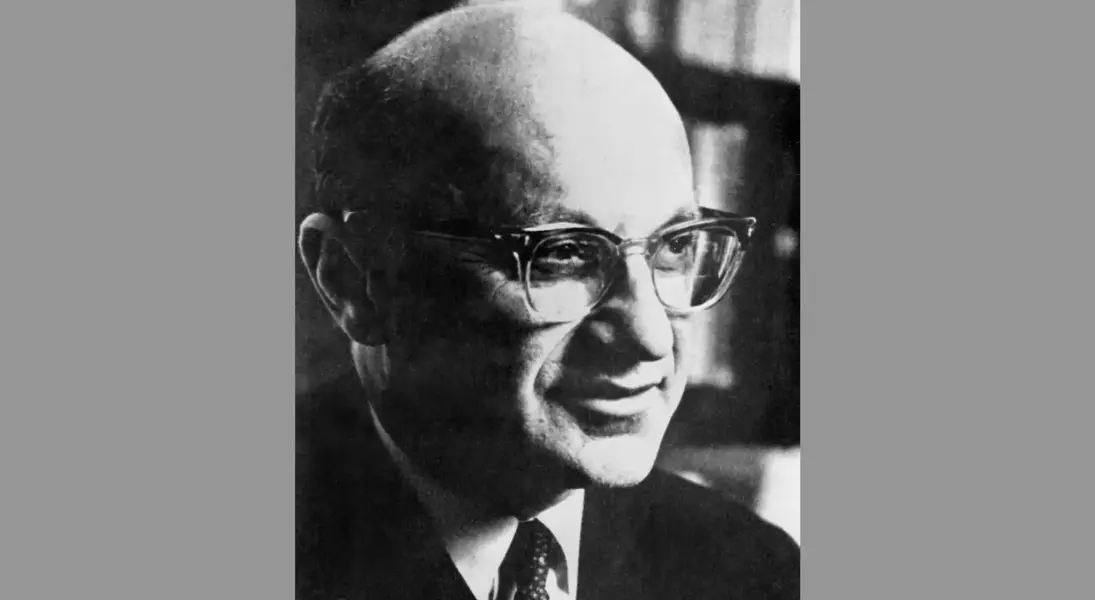
A recent scholarly exchange between two prominent health policy experts, Stuart Butler and John E. McDonough, has cast a critical light on the persistent challenges plaguing the American healthcare system. Their discourse centers on the influence of neoliberal economic ideologies, particularly those associated with Milton Friedman, on the evolution and current state of healthcare in the United States. McDonough posits that these principles, emphasizing market forces and shareholder value, have inadvertently steered the system towards its present predicament, characterized by high costs, access barriers, and a decline in public trust. Butler, while sharing concerns about the system's shortcomings, argues that a deeper understanding of neoliberalism's core tenets reveals a focus on effective competition and individual empowerment, suggesting that the issues stem more from implementation failures rather than inherent flaws in the philosophy itself. This intellectual sparring offers valuable insights into the complex interplay between economic theory and public health outcomes.
The conversation originated from John E. McDonough's new publication, "America's Wrong Turn: U.S. Healthcare in the Neoliberal Era," in which he meticulously outlines his conviction that the neoliberal movement, gaining traction in the 1970s and exemplified by figures such as Ronald Reagan and Margaret Thatcher, profoundly impacted American healthcare. He contends that while neoliberalism wasn't explicitly designed to reform healthcare, its overarching societal changes inevitably affected the sector due to its sheer scale. McDonough identifies several interconnected problems: stringent approval requirements for services, exorbitant cost-sharing, a surge in consumer medical debt, escalating commercial premiums, and the growing penetration of private equity into various medical practices, leading to widespread consolidation and monopolization. He views these as direct consequences of neoliberal policies over the past four decades, from 1980 to 2020.
Stuart Butler, a long-time observer of health policy, concedes that the symptoms of distress in American healthcare – patient confusion, debt, and inadequate access for millions – are undeniable and deeply troubling for a prosperous nation. However, he diverges sharply from McDonough's attribution of blame. As a self-proclaimed admirer of Milton Friedman and neoliberal thought, Butler argues that McDonough's book exaggerates and misrepresents the true objectives of this economic philosophy. Butler emphasizes that genuine neoliberalism, rooted in a "people-first approach," has always been concerned with preventing monopolies and fostering open entry and competition. He suggests that the perceived failures are not a result of neoliberal principles themselves, but rather a corruption of the antitrust system and a misinterpretation of concepts like maximizing shareholder value. Butler points out that Friedman, despite his strong advocacy, also recognized the necessity of government intervention to thwart monopolies and championed the idea of subsidizing individuals to ensure access to essential services.
A central point of contention revolves around the concept of monopoly and antitrust. McDonough highlights the historical consensus in the U.S. to prevent corporate overreach through antitrust legislation, a sentiment even initially shared by Friedman. However, McDonough argues that a significant shift occurred in the 1950s at the University of Chicago, leading to Robert Bork's influential "The Antitrust Paradox." This work challenged the notion that "big is always bad," asserting that market success justified corporate scale. This idea gained traction, leading to the Reagan administration's redefinition of antitrust guidelines in 1981-82, which prioritized consumer welfare and resulted in a dramatic reduction in antitrust enforcement. McDonough links this to the massive wave of mergers and acquisitions in healthcare, contributing to its current expensive and monopolized state, where over 90% of U.S. hospital sectors are now highly concentrated. Butler, while acknowledging the evolution of neoliberal thought on antitrust, maintains that the core principle of effective competition and open entry remained paramount, with changes in approach reflecting a concern about the political manipulation of antitrust laws rather than an acceptance of monopoly.
Another critical area of debate focuses on Milton Friedman's hypothesis regarding the sole duty of for-profit corporations: maximizing shareholder value. McDonough refers to Friedman's 1970 New York Times op-ed, which asserted that a corporation's only responsibility is to generate returns for its shareholders, dismissing obligations to customers, patients, or communities as myths. McDonough argues that this doctrine, known as MSV (maximizing shareholder value), has become immensely influential, leading to changes in CEO compensation structures (favoring stock options) and fostering an environment where profit-seeking often overrides broader societal concerns. He directly links this philosophy to the rise of private equity, which he views as organizations solely dedicated to rapid wealth accumulation for shareholders, often at the expense of patient care and community well-being. Butler, however, contextualizes Friedman's argument, stating that the debate was originally about whether corporations should have a public purpose imposed on them by managers without shareholder consent. He argues that Friedman and other neoliberals still believed corporations should operate within the bounds of law and societal values, and that the idea of ignoring rights and profiting from illness was a misinterpretation. He concedes, though, that the strong emphasis on profits did lead many to adopt a narrow view of corporate responsibility.
The discussion highlights that while experts may agree on the problems facing the healthcare system, their differing interpretations of historical economic philosophies lead to varied proposals for future action. McDonough calls for a reassessment of the financialization and corporatization of U.S. medical care, advocating for a shift away from a sole focus on financial returns. He suggests that while completely removing private equity might be unrealistic, their involvement in direct patient care organizations should be reconsidered to restore trust and community focus. Butler largely concurs with the need for community-driven healthcare and local control, acknowledging that decisions made by distant entities primarily focused on financial gain are unlikely to benefit patients. He emphasizes that healthcare, particularly public health, is a community venture that should reflect local values and needs. However, Butler also points out the potential benefits of private equity in fostering innovation and investing in high-risk ventures that traditional capital sources might avoid, advocating for careful regulation rather than outright exclusion. Both experts ultimately express a desire for bipartisan collaboration to address these pressing issues, looking to past efforts like the Affordable Care Act as a model for finding common ground, despite the challenges of political polarization.
The ongoing dialogue underscores the critical need for collaborative engagement among diverse perspectives to navigate the intricate landscape of health policy. Despite historical disagreements and differing interpretations of economic principles, a shared commitment to improving healthcare accessibility and quality in the United States remains evident. The experts' willingness to acknowledge common ground, even while debating the specific mechanisms and historical drivers of the current challenges, offers a hopeful outlook for future policy development. Moving forward, the emphasis on open dialogue, mutual respect, and a readiness to adapt strategies based on empirical outcomes will be crucial in fostering meaningful reforms and rebuilding public trust in the American healthcare system.