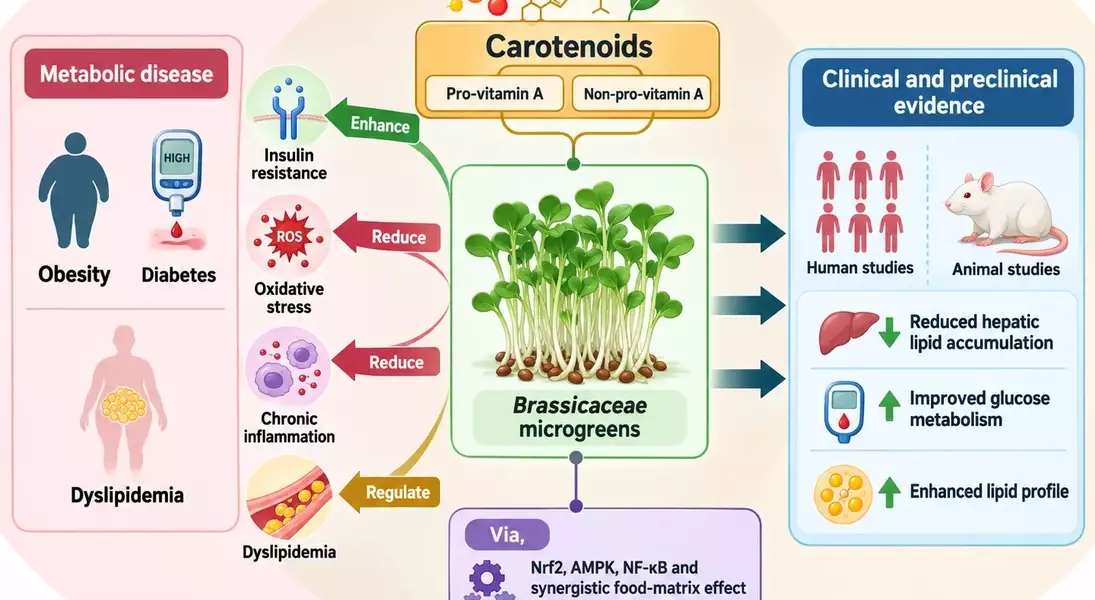
A recent comprehensive review has shed light on the potential therapeutic role of broccoli sprouts and other Brassicaceae microgreens in managing insulin resistance and associated metabolic disorders. These nutrient-dense greens, abundant in carotenoids and various bioactive compounds, are emerging as a promising dietary intervention. The review synthesizes current scientific understanding regarding carotenoid metabolism, their bioavailability, and the specific impact of Brassicaceae microgreens on conditions like obesity and type 2 diabetes. While initial findings suggest positive effects on metabolic markers, the authors emphasize the necessity for more rigorous and extensive research to solidify these claims and translate them into actionable dietary guidelines.
Carotenoids, the vibrant pigments found in many fruits and vegetables, are integral to various physiological functions and have been linked to improved metabolic health. These compounds are categorized into provitamin A carotenoids, such as beta-carotene, and non-provitamin A carotenoids, including lutein and lycopene. Their potential influence extends to insulin sensitivity, lipid metabolism, adipogenesis, and inflammatory pathways, often mediated through cellular signaling involving AMPK, Nrf2, and NF-κB. The efficacy of carotenoids is, however, subject to numerous factors, including their type, dosage, the food matrix they are consumed within, and individual physiological differences, highlighting the complexity of their dietary impact.
The journey of carotenoids from food to physiological action involves intricate processes of absorption and bioavailability. This begins with their release from the food matrix during digestion, followed by their incorporation into mixed micelles for intestinal uptake. Specialized transport proteins facilitate this absorption, and provitamin A carotenoids undergo enzymatic conversion into vitamin A. Factors like carotenoid structure, food preparation methods, dietary fat intake, genetic predispositions, age, and overall health status significantly modulate bioavailability. This variability means that the mere concentration of carotenoids in a food does not directly predict their utilization by the body.
Experimental studies, both in vitro and in vivo, have provided compelling evidence of carotenoids' influence on lipid accumulation and glucose regulation. For instance, specific carotenoids like beta-carotene, fucoxanthin, and astaxanthin have demonstrated the ability to reduce triglyceride levels, modulate cholesterol, and decrease lipid accumulation in skeletal muscle within animal models. However, human trials have presented more mixed results, with some interventions showing improvements in antioxidant status and LDL oxidation resistance, while others have not yielded significant changes in inflammatory markers or glycemic indices. This discrepancy underscores the challenges in translating animal findings directly to human health outcomes and the potential for confounding factors from other nutrients within whole foods.
Brassicaceae microgreens, encompassing varieties such as broccoli, cabbage, and kale, represent a concentrated source of carotenoids and other health-promoting phytochemicals like glucosinolates and polyphenols. Their nutrient density is remarkable, with high levels of beta-carotene equivalents. The tender, immature nature of these microgreens might facilitate a more efficient release of carotenoids during digestion compared to mature vegetables. Moreover, cultivation conditions, such as light spectrum and intensity, can significantly alter their phytochemical composition, offering avenues to enhance their nutritional value. While studies on broccoli sprouts have shown improvements in metabolic and inflammatory markers in humans, evidence for other Brassicaceae microgreens largely stems from animal research, necessitating further human-centric investigations.
The mechanisms by which these greens exert their effects are thought to involve the activation of AMPK for improved fatty acid oxidation, the enhancement of antioxidant defenses through Nrf2 signaling, and the reduction of inflammation via NF-κB suppression. Despite these promising pathways, current research faces limitations, including small sample sizes in clinical trials, short intervention durations, and the inherent differences between animal models and human physiology. These factors contribute to the difficulty in drawing definitive conclusions and isolating the precise effects of individual compounds within the complex matrix of microgreens.
In conclusion, while carotenoids and Brassicaceae microgreens hold significant promise for supporting metabolic health through their antioxidant, anti-inflammatory, and insulin-sensitizing properties, more robust scientific inquiry is essential. Specifically, larger, long-term randomized controlled trials are needed to standardize dietary interventions, clarify dose-response relationships, and elucidate the intricate interactions among various phytochemicals. Such comprehensive evidence will be crucial for developing reliable dietary recommendations aimed at preventing and managing obesity and type 2 diabetes, ensuring that the full potential of these powerful greens can be harnessed effectively for human well-being.